
How accurate is your calibrated volume/ha?
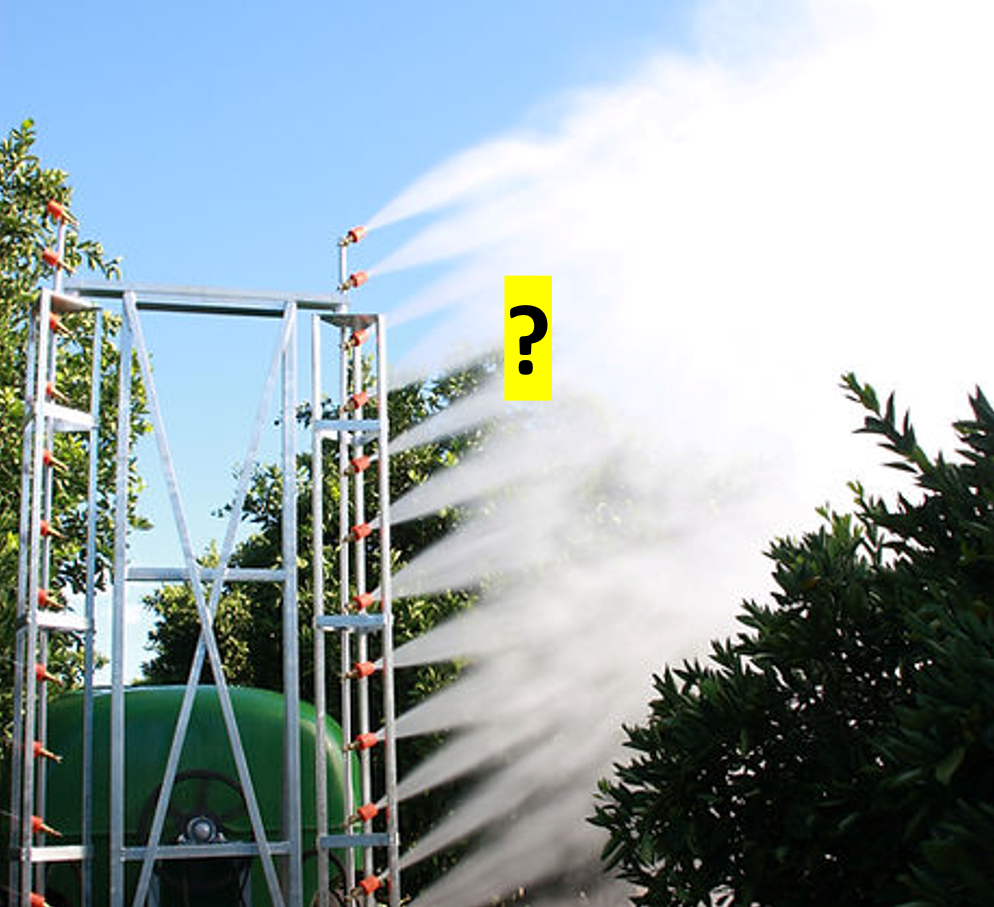
How accurate is your calibrated spray volume/ha?
•Spraying less than the optimally required l/ha can lead to reduced spray deposition and compromised biological outcomes, resulting in potential crop quality and yield loss.
•Spraying more than the optimally required l/ha can lead to excessive deposition, run off, accumulation on the target surface of the formulation, risking phytotoxicity, excessive residues and resultant crop quality issues and potential rejection.
•The run off causes direct excessive costs, soil and ground water contamination.
You know that…
•The bulk of agricultural sprayers are not equipped with electronic flow meters to assist accurate calibration.
•On these sprayers the only reference to the flow rate (l/min) calibrated relies on the pressure gauge reading and the nozzle flow chart.
•In both instances it is extremely difficult to TEST the finally achieved flow rate (l/min) to confirm the accuracy of the set up calibration, and is usually not done correctly and regularly, or not done at all.
•The flow low rate (l/min) is the most BASIC parameter of the calibration to get right, and bears a DIRECT relationship to the application volume (l/ha) required:
Total flow rate (l/min) = {Application volume(l/ha) x Effective Spraying width (m) x Actual Spraying Speed (km/h)}/600
But did you know that..?
•Electronic flow meters are contaminated easily with the continuous chemical exposure and requires REGULAR cleaning and calibration to remain reliable and accurate. If regular cleaning and re-calibration is not performed, the only consistency achieved would be in the rate of application (l/ha) mistakes made – and not even knowing about it!
•Pressure gauges are notoriously unstable and inaccurate, and it is even worse when they are mounted on the pressure control unit. The pressure drop from pressure control unit to nozzle spray tip on the spray boom can be as much as 50%, especially under higher flow rates. Pressure gauges mounted on the spray boom will reflect pressure more accurately, but will still be at best the initial set up to measure with a calibration procedure and adjusted until the required flow rate (l/min) is confirmed.
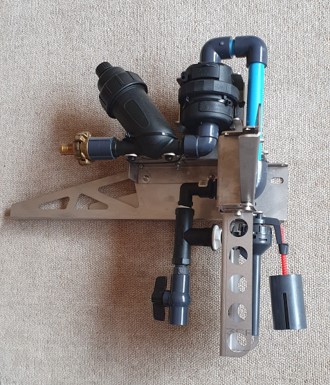
The Solution!
 Ras Consult